Snowmobile Track Studs
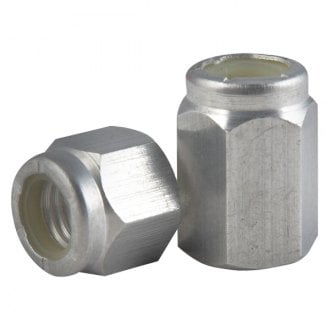
Studding a snowmobile track has long been an efficient way to increase traction and control. First of all, snowmobile track studs are there for safety reasons, providing more stopping power and ensuring better cornering control. For racers, putting more traction to the ground at launch also means faster, more confident acceleration. Although track studding originated from snowmobile racing, these traction products can be added to just about any sled to optimize its braking and cornering control, especially in icy conditions. We have track studs for a variety of applications and everything you need to complete the installation, including stud templates and nuts.
Selecting the right type, length, and number of studs depends on many factors, including the intended use, usual trail conditions, your riding style, and the performance specs of your sled. Studding will give you the proper control over your snowmobile only if you use the right amount of studs of the proper length and place them correctly. Riding with too few studs can give you as much trouble as adding too many of them to the track. A lower number of studs increases the amount of load on each of them, and odds are that you'll end up with broken studs and track. On the other hand, having more studs than needed slows down your sled due to excessive rotating mass added to the track. Turning control can be compromised as well.
As a general rule of thumb, riders install at least one stud per horsepower. Using 1,5 studs per horsepower is a common starting point. Anyway, it all depends on your riding style and your evaluation of changes in your sled's performance, so you can add and remove studs until you achieve optimal traction. Typically, 96 studs on a 121-inch track are enough for amateur riders, while putting more than 144 studs is worth it only if you're into high-performance ice racing. Again, it's up to you to determine the right number of studs depending on your type of riding.
When it comes to length considerations, longer studs are definitely not better. Race-spec studs are usually too long for average use, with all those stones, frozen mud, and scarce snow that can be there out on the trail. An excessively long stud will get bent or broken. In racing, stud length must not exceed 3⁄8-inches above the lug height, while the outside of the track must be bare for safety reasons. The general guideline is that longer studs are suitable for snocross and aggressive riding, while for casual snowmobilers, 1/4-inch studs are a starting point.
The placement of studs directly influences the performance of your sled. Luckily, stud manufacturers take the guesswork out of track studding by offering easy-to-use templates. Of course, you can use your own pattern that will allow you to achieve the proper bite for your needs. There are studs designed specifically for single-ply and two-ply tracks. Different tip designs are used depending on the application; trail studs typically have carbide tips that better dig into the surface, while competition studs feature aggressive, non-carbide shanks. Whether you are a racer or casual rider, we have just the right snowmobile track studs for your requirements.