
In this article, we’ll look at the materials most commonly used in the construction of helmets for powersports vehicles such as ATVs, UTVs, snowmobiles, and watercraft – along with the advantages these materials generally offer.
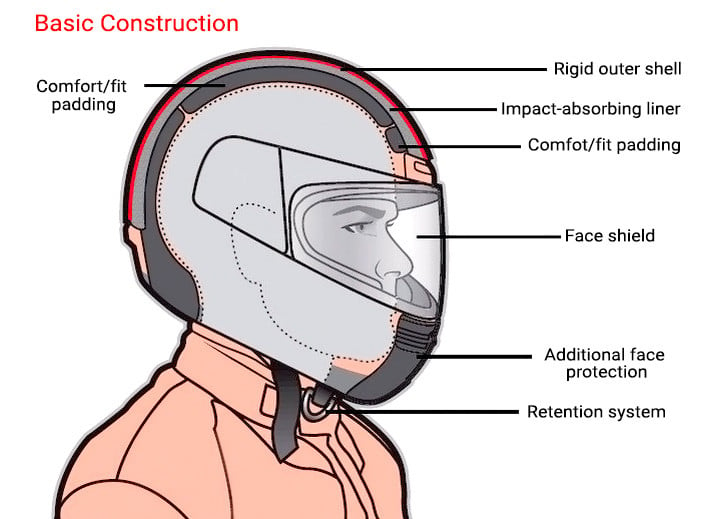
Powersports helmets are typically equipped with three to four layers. Starting on the inside, multiple levels of soft padding provide comfort, absorb moisture, and ensure a snug fit which prevents the helmet from shifting position on the head. Underneath that innermost padding is a thick layer of impact-absorbing Styrofoam designed to crush under heavy duress. Formally known as expanded polystyrene foam (EPS), it’s stiff but very crushable for one application.
Since these inner layers are more or less the same across most powersports helmets, we’re focusing on the most popular materials that hard outer shells are made of. Mainly, it’s these shell materials that determine how advanced a helmet’s level of crash protection is – and the general overall cost you’ll encounter when purchasing one.
How Helmet Construction And Materials Protect Your Head
Working together, a helmet’s hard outer shell and inner Styrofoam provide a great deal of protection for your head. First, the hard outer shell takes impact energy and spreads it out across a wider portion of the helmet without becoming punctured or cracking. As the shock wave travels across the shell, the Styrofoam will collapse in areas where the most impact cushioning is needed.
Thanks to design and manufacturing technologies that have advanced a great deal, even the most value-priced helmets from today will protect you better than many from yesteryear could dream of. For this reason, wearing any modern helmet is far better than not wearing one at all.
Materials used in outer shells are grouped into basic thermoplastics (ABS, polycarbonates, blends of both) and complex fiber/resin mixes (fiberglass, carbon fiber, Kevlar, etc). Up to a certain speed point, less expensive thermoplastic helmets can be equally as safe as more expensive composite fiber ones. The noticeable difference is that thermoplastic helmets must be thicker (and heavier) to provide the same level of protection. Naturally, a lighter weight helmet makes any kind of riding more comfortable – especially during rough-and-tumble use.
You’ll find a larger number of helmet material choices in the “Full Face” section because full face helmets are tailored for use at the highest speeds. Conversely, specialized helmets such as those in the “Snowmobile” category offer fewer exotic material choices because they’re designed for the relatively lower speeds and (sometimes) softer impacts of snow riding.
Plastic-Based Helmets
When it comes to plastic compounds used in helmet shell manufacturing, two main types exist: "thermoplastics", and "thermoset resins". Helmets made from either type are rigid and flexible, but not as strong pound-for-pound as composite weave materials. To beef up protection levels and meet safety guidelines, more plastic material must be used - creating a helmet that's larger, thicker, and heavier overall. The advantage of plastic helmets is, however, their lower cost.
Thermoplastics are made from simple oil-based polymers that are blended and poured into helmet-shaped molds. Because they don't require complex curing procedures, thermoplastic helmets are usually priced lower. Conversely, advanced thermoset resins (ATRs) require the addition of a curing agent to create the chemical reaction necessary for the plastic to harden into final form.
ABS (Thermoplastic)
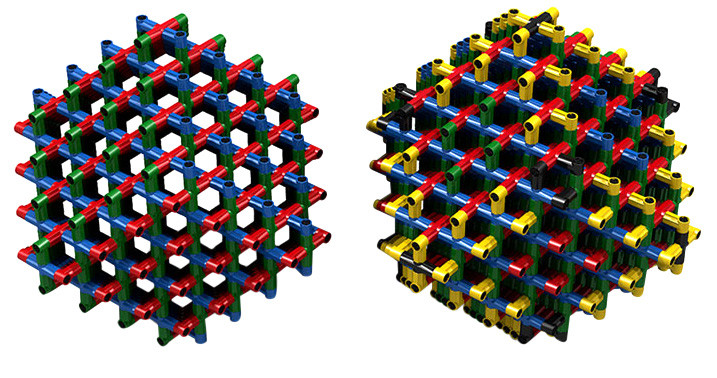
The most common low-cost thermoplastic on the market is known as ABS plastic (Acrylonitrile Butadiene Styrene) - essentially a mix of polymers and polybutadiene rubber that's simple to manufacture. ABS is widely used in helmets because of its superior dent resistance and overall durability. However, as mentioned previously, ABS helmets typically weigh in on the heavy side.
Polycarbonate (Thermoplastic)
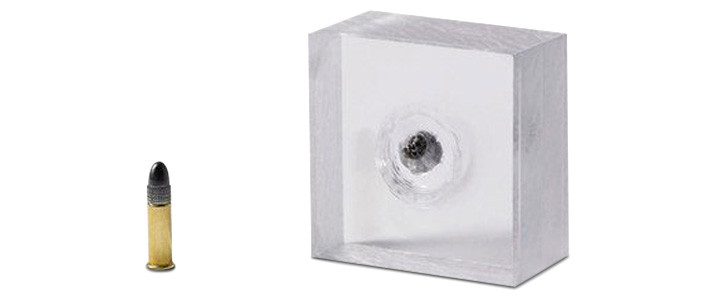
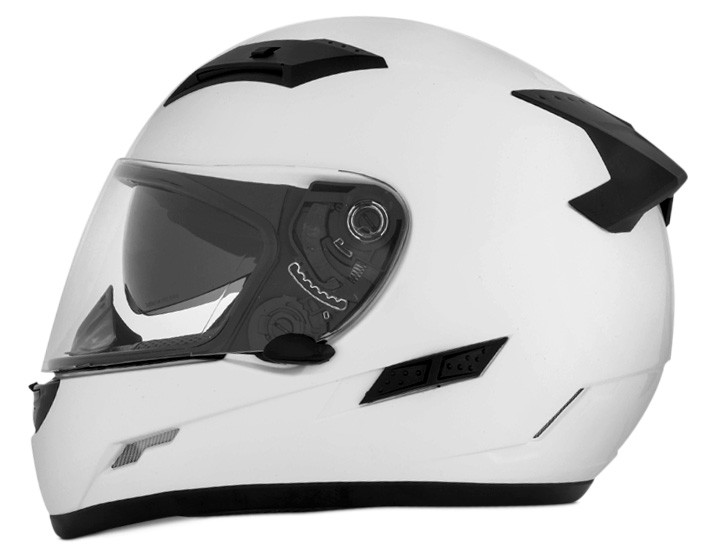
In pure form, polycarbonate is a clear plastic used to make durable eyeglass lenses, helmet wind visors, bulletproof windows, greenhouse glass, and more. In modified form, polycarbonate helmets offer higher impact resistance than ABS ones - making them an excellent value-priced choice for higher-speed riding if you don't mind the extra weight. Some helmets that use a particular polycarbonate formula patented by General Electric will use the descriptor "Lexan" to refer to the material.
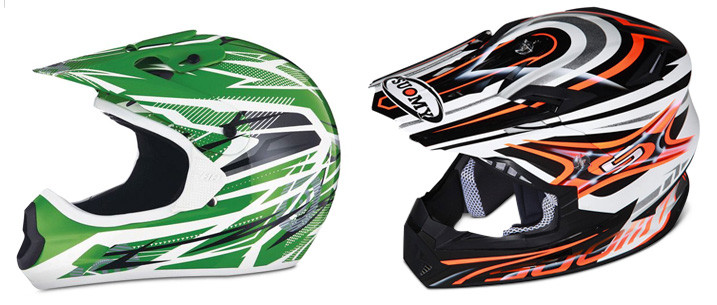
Advanced Thermoset Resin (ATR)
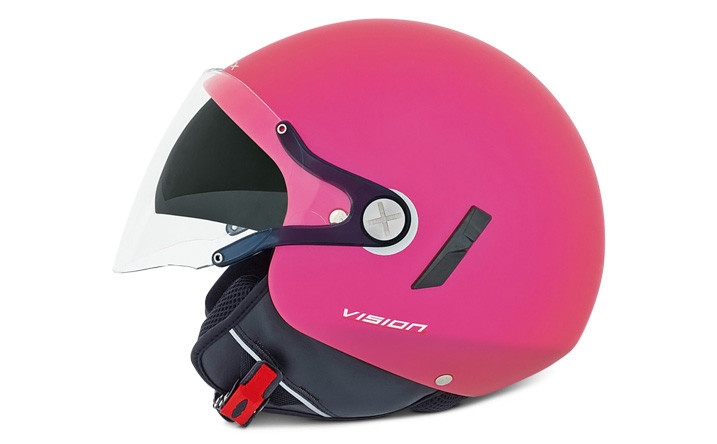
Unlike thermoplastics which cure on their own, thermoset plastic material does require a polyurethane, epoxy, or other chemical curing agent in order to harden fully. After the epoxy is added, the thermoset mix is heated and injected into a helmet mold. These extra chemical processing steps result in a helmet shell that's harder than any thermoplastic.
Composite Fiber Materials
"Composite fiber" construction is a descriptive term for layering many sheets of fiber strands at criss-crossing angles between liquid resin - a process used in the manufacturing of carbon fiber, Kevlar, and fiberglass helmets. After enough layers, a weave pattern with very high strength levels is achieved. Since this labor process is much more involved and requires costly fibers and fillers, composite helmets are noticeably more expensive.
It's important to note that helmets designated as "fiberglass", "carbon fiber", etc., usually contain a mix of more than one of these fiber types. Unless indicated otherwise, official helmet designation signifies the specific material that's most prevalent in the composite mix. In other words, a fiberglass helmet will contain more fiberglass strands than anything else.
"Composite" Helmets
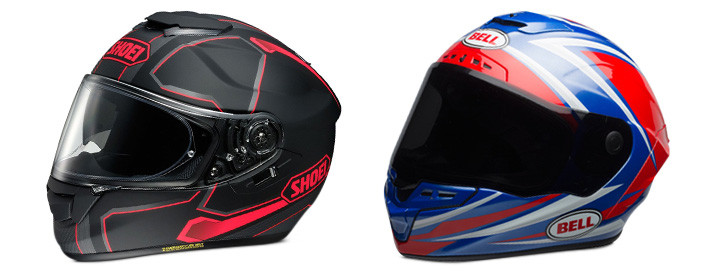
While virtually all fiberglass and carbon fiber helmets can technically be considered composite helmets, there's also another specific designation of helmet labeled as "composite". Such helmets may contain glass fibers and carbon fibers in more equal parts, or they may contain other ingredients in the mix. Epoxies used may also deviate from what's normally used to create traditional fiberglass or carbon fiber helmet shells. Pricing on these helmets will vary depending on their makeup.
Fiberglass
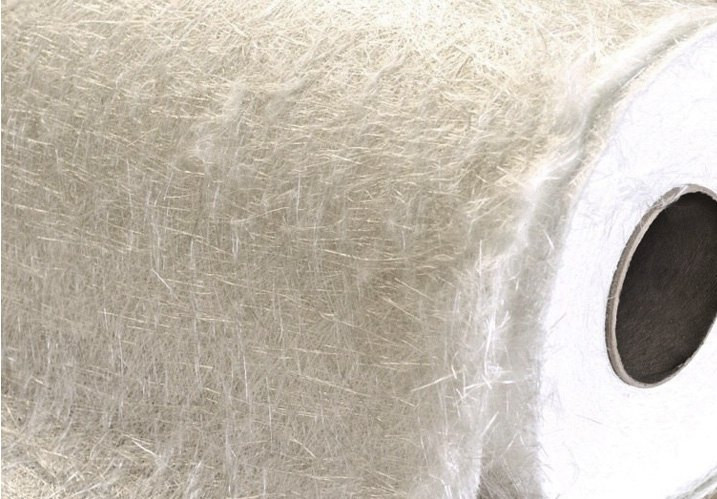
A key benefit of finished fiberglass material is how well it combines hardness with flexibility. This means a shock wave is more evenly spread out across a wider section of the helmet surface in an impact - and more of the inner Styrofoam layer as well. Because energy is better disbursed, the foam layer can be thinner overall and allow the rest of the helmet to be smaller and lighter. Fiberglass is often used for off-road helmets.
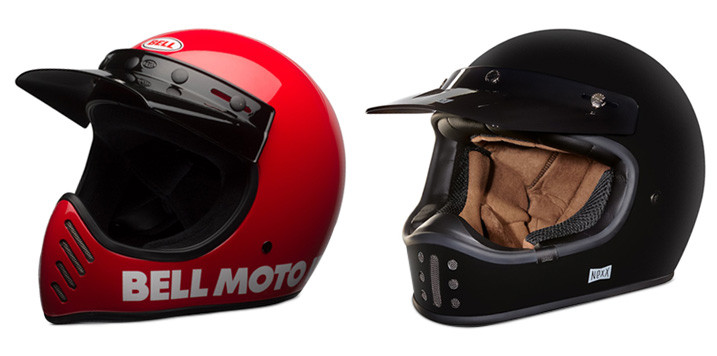
Note that fiberglass is also brittle by nature, so its greater flexibility can lead to cracks forming across the helmet shell on impact. To counter that, most fiberglass helmets contain higher-strength Kevlar and carbon fiber in the weave pattern (helmet prices will rise as their contents increase).
Carbon Fiber
Thanks to the unique way carbon atoms align and bond together along fibers in a crystal formation, woven carbon fibers mixed with plastic resin are extremely strong and extremely light in weight. To expand on the "extremely strong" definition, finished carbon fiber offers high tensile strength and excellent compression strength.
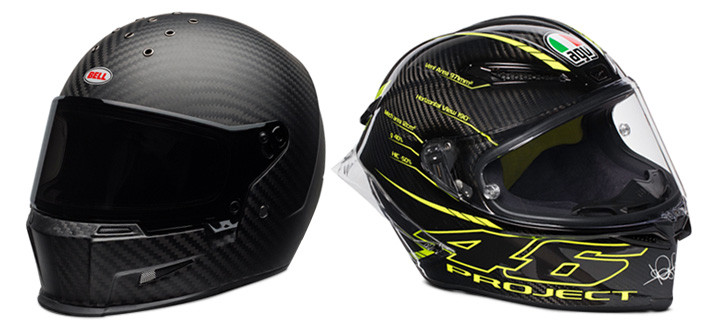
A helmet shell with all of these characteristics will effectively absorb shocks that could fragment lesser materials. As the shell absorbs and spreads out any shock wave across a wider section of the helmet, more of the Styrofoam inner layer ends up cushioning the head. This makes carbon fiber helmets a natural fit for high speeds involved in upper levels of powersports racing. This durability is also beneficial if a carbon fiber helmet is accidently dropped on the floor, because it will be more resistant to scratches and cracks.
Kevlar
Typically, you won’t see many helmets classified as “Kevlar” helmets, because Kevlar is what’s commonly added as a second ingredient to fiberglass and carbon fiber to boost overall tensile strength. But what is Kevlar? Trademarked by DuPont, it’s a composite material produced with the same weave methods as fiberglass, then mixed with a very strong plastic compound.
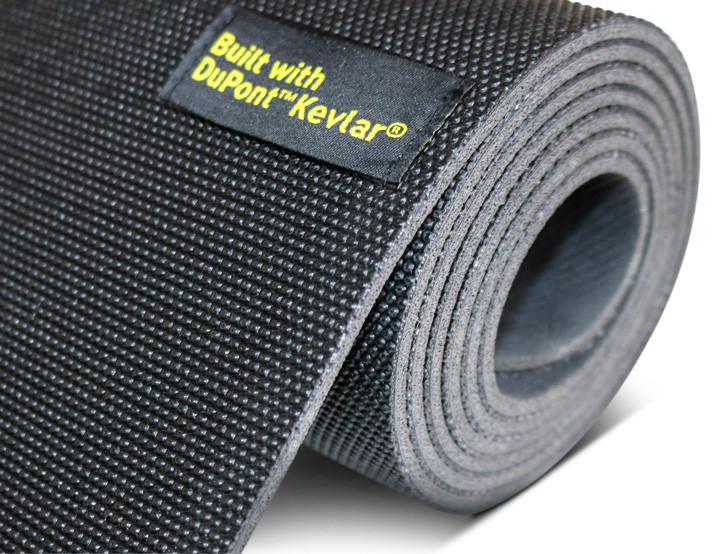
Since the molecular structure of the fibers naturally occurs in even, parallel lines, Kevlar ends up with a much higher tensile strength than fiberglass. In fact, Kevlar is so strong that it’s used to make bulletproof vests. And because Kevlar’s extra strength allows the weave to be less dense, high safety levels can be met with helmet weights of up to 20% less than fiberglass.
Note that while Kevlar material naturally has high tensile strength, it does not hold up as well when it comes to compression. To correct this problem, carbon fiber is typically added to the weave to create a helmet that delivers the best characteristics of both materials.
Synthetic Reinforced Shell (SRS)
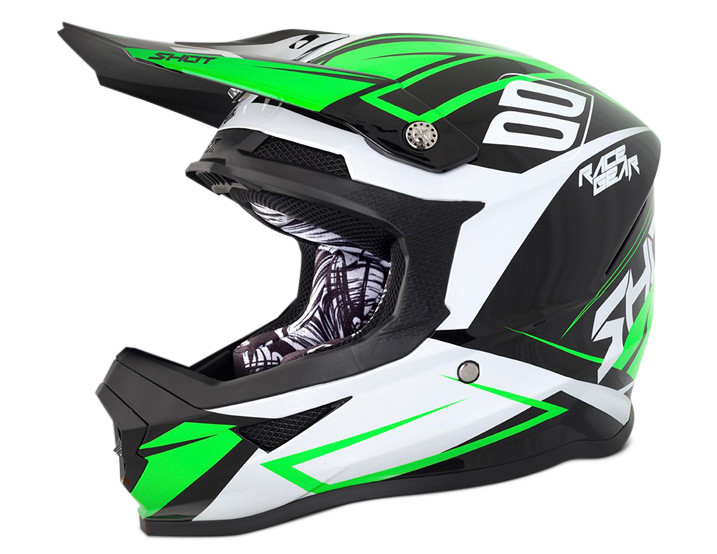
Synthetic Reinforced Shell (SRS) helmets generally aren't as common as other types. Essentially, these are low-cost thermoplastic resin helmets (see section 2.3 of this article) with smaller amounts of glass and other fibers added for increased strength and flexibility. Because of the presence of these fibers, less plastic is required during construction and overall weight is lighter.

If you're interested in furthering your education about powersports helmets, we invite you to read our other related articles regarding helmet types, sizes, and more. And if you have any questions, we'll be happy to help seven days a week!